

Where Africa’s greatest wildlife wilderness meets the Indian Ocean’s most beautiful island — the Tanzania safari and Zanzibar beach holiday is the journey every traveler dreams of taking.
Introduction
Ask anyone who has traveled extensively in Africa to describe their single most complete travel experience, and a particular combination appears with striking regularity. Not the safari alone, magnificent as it is. Not the beach alone, perfect as that can be. But the two together — the Tanzania mainland safari paired with a Zanzibar beach holiday — woven into a single seamless journey that moves between the world’s greatest wildlife spectacle and one of the Indian Ocean’s most enchanting island destinations.
This is not a coincidence. The Tanzania safari and Zanzibar beach holiday has earned its reputation as the definitive East African travel experience through the simple, irreducible fact that it delivers more — more variety, more depth, more emotional range, more genuine encounter with the natural and cultural richness of this extraordinary corner of the world — than almost any other journey of comparable length available anywhere on the planet.
Tanzania is uniquely positioned to offer both experiences. Its mainland shelters some of Africa’s most celebrated wildlife ecosystems: the boundless Serengeti, the volcanic wonder of Ngorongoro, the elephant paradise of Tarangire, and the remote wilderness of Nyerere. Forty minutes by air from the coast, the Zanzibar Archipelago rises from the Indian Ocean as a world apart — coral sand beaches of breathtaking beauty, the UNESCO-listed Swahili civilization of Stone Town, warm turquoise water above reefs of extraordinary marine biodiversity, and an atmosphere of unhurried island grace that has captivated travelers for centuries.
Together, they offer what travel rarely delivers so cleanly: the complete experience. This article is your authoritative guide to planning, structuring, and living the Tanzania safari and Zanzibar beach holiday to its fullest potential.
Understanding the Two Worlds
Tanzania’s Safari Wilderness
Tanzania protects more land for wildlife conservation than almost any nation on Earth. Approximately 38 percent of the country’s total land area is designated as national park, game reserve, conservation area, or other protected wildlife habitat — a commitment to conservation that is reflected in the extraordinary quality and diversity of the wildlife experiences available to visitors.
The country’s safari landscape divides naturally into two circuits, each offering a distinct character of experience:
The Northern Circuit — anchored by the Serengeti, Ngorongoro Conservation Area, Tarangire, and Lake Manyara — is Tanzania’s most visited and most celebrated safari region. It offers the highest wildlife densities, the most developed tourism infrastructure, the widest range of accommodation, and the anchoring spectacle of the Great Migration — the annual movement of over 1.5 million wildebeest and hundreds of thousands of zebras through the Serengeti-Mara ecosystem. This is the circuit that most Tanzania safari and Zanzibar beach holiday itineraries incorporate, and for good reason: it delivers wildlife encounters of a consistency and quality that few destinations anywhere in the world can match.
The Southern Circuit — centered on Nyerere National Park (the former Selous Game Reserve) and Ruaha National Park — offers a dramatically different safari experience. Remote, wild, and visited by a fraction of the tourists who flock to the northern parks, the southern circuit is where travelers seeking genuine wilderness solitude and exclusivity find their Tanzania. Boat safaris along the Rufiji River, exceptional wild dog and elephant populations, and the profound sense of space that comes from being virtually alone in Africa’s largest protected wildlife area make the southern circuit a compelling alternative or addition for those with the time and appetite for deeper exploration.
Zanzibar: The Spice Island
The Zanzibar Archipelago comprises the main island of Unguja — commonly called Zanzibar Island — along with Pemba Island and several smaller coral islands scattered across the Indian Ocean approximately 35 kilometers from the Tanzanian coast. The archipelago’s history is one of the Indian Ocean’s most compelling narratives: a crossroads of trade between Africa, Arabia, Persia, India, and eventually Europe that produced a civilization — the Swahili Coast culture — of remarkable sophistication and beauty.
That history is most visibly and magnificently preserved in Stone Town, Zanzibar’s ancient capital and a UNESCO World Heritage Site since 2000. The old town’s coral-stone architecture, ornately carved wooden doors, mosques and Hindu temples standing within meters of each other, the legendary spice markets fragrant with cloves, cinnamon, cardamom, and black pepper — all of these speak to a past in which Zanzibar stood at the center of the world’s most important trade routes.
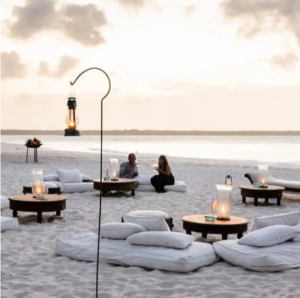
Beyond Stone Town, Zanzibar unfolds into a paradise of natural beauty. The island’s beaches rank among the Indian Ocean’s finest — white coral sand, water in shades ranging from pale jade to deep sapphire depending on depth and time of day, and the characteristic low-tide sandflats that extend for hundreds of meters on the eastern coast, creating tidal landscape paintings of extraordinary visual poetry.
The Wildlife Experience: Tanzania’s Safari Parks in Detail
The Serengeti National Park
The Serengeti is the foundation of Tanzania’s global safari reputation and the essential anchor of any mainland wildlife itinerary. This UNESCO World Heritage Site and Biosphere Reserve covers 14,763 square kilometers of open grassland plains, riverine forest, and ancient granite kopje — a landscape that has remained essentially unchanged for two million years and that continues to support one of the greatest concentrations of large mammals anywhere on Earth.
The Great Migration defines the Serengeti’s calendar for wildlife travelers. Between January and March, the vast wildebeest herds gather on the southern Serengeti’s short-grass plains around Ndutu for calving season — a period of extraordinary biological intensity when half a million calves are born within weeks, drawing predators in astonishing concentrations. By June and July, the migration has pushed through the western corridor, crossing the Grumeti River in dramatic scenes of survival and predation. August through October brings the famous Mara River crossings in the northern Serengeti — the migration’s most cinematic chapter, where columns of wildebeest plunge into crocodile-filled waters in scenes of raw, overwhelming natural drama.
Beyond the migration, the Serengeti’s resident wildlife delivers year-round encounters of exceptional quality. The Seronera Valley remains one of Africa’s finest predator viewing corridors regardless of season — resident lion prides, leopard visible in the sausage trees above riverine pools, and cheetah mothers raising cubs on the open plains provide a wildlife experience that stands entirely on its own merits independent of migration positioning.
Ngorongoro Crater
The Ngorongoro Conservation Area’s volcanic caldera is, in the estimation of many experienced safari travelers, the single most reliable and rewarding game-viewing destination in Africa. This 260-square-kilometer enclosed ecosystem — formed when a massive volcano collapsed inward three million years ago — supports approximately 25,000 to 30,000 large animals within a geographical space that is entirely navigable within a single game-drive day.
For Tanzania safari and Zanzibar beach holiday travelers, the crater’s greatest value lies in its certainty. When time is finite and the desire to witness the Big Five — lion, leopard, elephant, buffalo, and black rhinoceros — is paramount, no destination on the continent delivers with greater consistency. The crater also holds one of Africa’s most important wild black rhino populations, with 20 to 30 individuals providing sighting opportunities dramatically superior to those available elsewhere. One to two full crater game-drive days, based at a rim lodge with panoramic caldera views, represent an outstanding complement to Serengeti time in any combined itinerary.
Tarangire National Park
Tarangire rewards the traveler willing to look beyond the headline parks. During Tanzania’s dry season, the Tarangire River becomes the focal point for one of Africa’s most spectacular elephant gatherings — thousands of animals converging from across the ecosystem in a slow, unhurried pilgrimage that creates game-viewing scenes of genuine majesty. The park’s landscape, dominated by ancient baobab trees of extraordinary age and sculptural grandeur, provides a visual backdrop unlike anything elsewhere in northern Tanzania. One to two nights makes Tarangire a richly rewarding addition to any safari and beach itinerary.
The Zanzibar Beach Experience in Depth
Choosing Your Beach
Zanzibar’s beaches serve different purposes within the context of a safari and beach holiday, and choosing the right location enhances the decompression and recovery chapter of the journey significantly:
Nungwi (Northwest Coast): Tanzania’s most popular resort beach and for good reason — calm, clear water year-round protected from tidal extremes, a lively social atmosphere, excellent restaurants, water sports facilities, and sunset views across the open ocean. Ideal for travelers who want beach comfort paired with activity and social energy after the intensity of the bush.
Kendwa (Northwest, adjacent to Nungwi): Slightly more secluded than Nungwi with the same exceptional water conditions. Full-moon beach parties are a Kendwa institution. A quieter atmosphere that suits couples and travelers seeking relaxation over activity.
Paje (East Coast): The Indian Ocean’s kitesurfing capital and one of Zanzibar’s most visually striking beaches — a long sweep of white sand with the characteristic shallow lagoon and sandflat landscape of the eastern coast. More secluded than the north, suited to independent travelers and those for whom solitude in beautiful surroundings is the priority.
Jambiani and Bwejuu (Southeast Coast): The island’s most undeveloped and authentic beach areas, where the pace of local life moves unhurried and the ocean views are uninterrupted. These beaches are best suited to travelers who want the genuine Zanzibar — away from resort infrastructure, in direct contact with island culture and community.
Stone Town: A Half Day That Rewards a Lifetime
No Tanzania safari and Zanzibar beach holiday is complete without meaningful time in Stone Town. A focused half-day walking tour — guided by a knowledgeable local guide who understands the architecture, history, and living culture of the old town — delivers an experience of genuine intellectual and sensory richness. The carved wooden doors alone constitute one of the Indian Ocean world’s great artistic traditions, each panel a narrative of the family that commissioned it. The spice market, the Forodhani Gardens waterfront food stalls at dusk, the poignant history of the former slave market and Anglican Cathedral — together they provide a cultural foundation that deepens the entire Zanzibar experience.
Ocean Activities
The Indian Ocean surrounding Zanzibar complements the mainland safari with a marine wildlife dimension of equal wonder. Snorkeling and diving at Mnemba Atoll Marine Conservation Area delivers encounters with reef sharks, sea turtles, manta rays, and the extraordinary coral ecosystems that have made this area one of the Indian Ocean’s premier dive destinations. Dolphin-watching boat trips from Kizimkazi on the island’s southwestern tip provide near-guaranteed encounters with Indo-Pacific bottlenose and humpback dolphins in their natural environment. Traditional dhow sailing — on hand-carved wooden vessels that have crossed the Indian Ocean for centuries — connects travelers to the maritime heritage that defined this island’s entire history.
Planning Your Holiday: Practical Considerations
Optimal Itinerary Lengths
A meaningful Tanzania safari and Zanzibar beach holiday requires a minimum of seven nights to do justice to both destinations. Ten to twelve nights represents the sweet spot for most travelers — three to four nights in Zanzibar and six to eight nights across two or three mainland parks. For those able to extend to fourteen nights, a comprehensive northern circuit experience paired with four to five Zanzibar nights creates a journey of genuine depth.
Seasonal Timing
The dual nature of this holiday means that optimal timing must balance both the mainland safari season and Zanzibar’s beach conditions. Two seasonal windows stand out as exceptional for the combination:
January through February delivers Zanzibar’s finest northeast monsoon beach season — warm, dry, and ideal for swimming and diving — simultaneously with the Serengeti’s calving season, one of the migration’s most dramatic and emotionally powerful chapters.
June through October offers dry-season game-viewing reliability across all northern Tanzania parks, the Serengeti’s iconic Mara River crossings in August through October, and pleasant Zanzibar conditions with excellent diving visibility in the early months of this window.
Getting Between Zanzibar and the Mainland
Light aircraft services connecting Zanzibar directly to Serengeti airstrips, Arusha Airport, and Kilimanjaro International Airport are operated by Coastal Aviation, Auric Air, ZanAir, and Air Excel. Commercial scheduled flights on Precision Air and Air Tanzania connect Zanzibar to Kilimanjaro International Airport in approximately 1 hour 20 minutes. All internal connections should be coordinated by a single specialist operator managing the complete itinerary.
Key Takeaways
- The Tanzania safari and Zanzibar beach holiday is the definitive East African travel experience — combining the world’s greatest wildlife wilderness with one of the Indian Ocean’s most beautiful island destinations.
- Tanzania protects approximately 38 percent of its total land area for conservation — one of the highest proportions of any nation on Earth — reflecting a commitment to wildlife that underpins the exceptional safari quality.
- The Serengeti, Ngorongoro, and Tarangire form the northern circuit’s core trio; most Tanzania safari and beach holiday itineraries incorporate two to three of these parks.
- Safari first, Zanzibar second remains the universally recommended sequence — completing wildlife experiences at peak energy, then decompressing on the island.
- Beach choice matters: Nungwi for social swimming, Kendwa for couples, Paje for kitesurfing and seclusion, Jambiani and Bwejuu for authentic island immersion.
- Stone Town is a UNESCO World Heritage Site of exceptional cultural richness — a minimum of half a day’s guided exploration should feature in every combined itinerary.
- Mnemba Atoll diving and snorkeling delivers a marine wildlife experience of world-class quality that complements the mainland safari with an entirely different dimension of natural wonder.
- January–February and June–October represent the two optimal seasonal windows for combining peak beach conditions with premier safari game viewing.
- A minimum of ten to twelve nights is recommended; seven nights is workable but requires careful prioritization of park time and beach recovery.
- TATO-accredited operators with demonstrable combined holiday expertise provide the itinerary design, logistical coordination, and guide quality that transform a good trip into a genuinely extraordinary one.
Questions & Answers
Q: Is the Tanzania safari and Zanzibar beach holiday suitable for first-time Africa travelers? It is arguably the ideal first Africa journey. Zanzibar’s accessibility, cosmopolitan beach infrastructure, and English-speaking hospitality sector provide a gentle, welcoming introduction to East African travel. The mainland safari — particularly when structured around Ngorongoro Crater’s near-guaranteed Big Five encounters as the opening act — delivers immediate and overwhelming wildlife validation that makes the investment of traveling to Africa feel completely, viscerally justified. The combination of beach comfort and wildlife intensity creates a journey that is both accessible and profound — the perfect foundation for what, in the experience of many first-time visitors, becomes a lifelong relationship with African travel.
Q: How does the Tanzania safari and Zanzibar beach holiday compare to a Kenya safari combination? Both Kenya and Tanzania offer extraordinary safari experiences, but Tanzania’s safari and Zanzibar combination has several distinctive advantages. Tanzania’s national parks are generally less crowded than their Kenyan equivalents, offering a more exclusive and immersive game-viewing experience. The Serengeti covers a larger area than Kenya’s Maasai Mara and hosts the migration for a greater portion of the year. Ngorongoro Crater has no Kenyan equivalent. And Zanzibar — more accessible from Dar es Salaam and Kilimanjaro than from Nairobi — is a more natural and logistically integrated beach component for the Tanzania-based traveler. Kenya’s coast at Diani or Watamu offers beautiful beaches but lacks the cultural depth and international recognition of Zanzibar.
Q: What vaccinations and health precautions are required for a Tanzania safari and Zanzibar holiday? Yellow fever vaccination is required for entry into Tanzania if arriving from a yellow fever endemic country, and is broadly recommended regardless. Hepatitis A and B, typhoid, rabies, and meningitis vaccinations are commonly recommended by travel medicine physicians for East African travel. Malaria prophylaxis is strongly advised for both Zanzibar and mainland Tanzania — both are malaria-endemic areas. Antimalarial medication, high-DEET insect repellent, covering exposed skin at dawn and dusk, and sleeping under mosquito nets are the standard protective protocols. Consultation with a travel medicine specialist at least six weeks before departure is strongly recommended to ensure full vaccination coverage.
Q: Can I combine a Tanzania safari and Zanzibar holiday with a gorilla trekking experience in Uganda or Rwanda? Yes, and for the adventurous traveler with sufficient time, this combination — often called the “East Africa Grand Tour” — represents one of the world’s supreme wildlife travel experiences. Mountain gorilla trekking in Rwanda’s Volcanoes National Park or Uganda’s Bwindi Impenetrable Forest can be combined with a Tanzania safari and Zanzibar beach holiday into a 14 to 18-night itinerary that encompasses primates, savannah megafauna, and Indian Ocean beach paradise. Routing typically flows Tanzania safari — Zanzibar — Kigali or Entebbe for gorilla trekking, or vice versa. Gorilla trekking permits must be booked well in advance through Rwanda Development Board or Uganda Wildlife Authority.
Q: What camera equipment should I pack for a Tanzania safari and Zanzibar holiday? For the safari component, a telephoto lens of 300mm to 500mm is essential for wildlife photography at safe viewing distances. A mid-range zoom lens (24–105mm or 24–70mm) handles landscape and camp photography. A bean bag or window mount dramatically improves image stability from the safari vehicle. For Zanzibar, an underwater housing or a dedicated waterproof compact camera captures the coral reef and marine life at Mnemba and elsewhere. A polarizing filter improves ocean and landscape photography by reducing glare and deepening sky contrast. High-capacity memory cards and portable battery packs are essential for both components — charging opportunities in the bush are limited, and the quantity of photographs generated on a good wildlife day is substantial.
Q: How do I ensure my Tanzania safari and Zanzibar holiday supports local communities and conservation? Responsible travel choices amplify the positive impact of your visit significantly. Choose TATO-accredited operators who employ local Tanzanian guides rather than expatriates, and who allocate meaningful portions of their revenue to community development programs. Select accommodation that is either community-owned, employs local staff at all levels, or actively funds conservation initiatives. In Zanzibar, purchase directly from local artisans and food vendors rather than resort-only retail. Participate in culturally managed Maasai village visits and Stone Town tours with operators that share revenue directly with community stakeholders. Avoid single-use plastics, respect wildlife viewing distances, and follow all guide instructions regarding interaction with animals and sensitive ecosystems. Every responsible choice compounds across thousands of visitors into conservation outcomes of genuine significance.

Conclusion
There are holidays, and then there are journeys. A holiday refreshes you. A journey changes you. The Tanzania safari and Zanzibar beach holiday is, unambiguously, a journey — one of the small number of travel experiences that the world offers which genuinely alter the traveler’s relationship with the natural world, with human history, and with their own capacity for wonder.
The safari delivers encounters that resist the ordinary language of travel description. The moment a pride of lions regards your vehicle with calm indifference from two meters away. The hour before sunrise when the first wildebeest begin crossing a crocodile river and ten thousand more follow within minutes, the air filled with dust and the deep, collective bellow of ancient instinct. The crater at dawn, wrapped in mist, and then revealed — its floor teeming with life, its walls rising around you like the ramparts of a world that has continued exactly as it was for three million years and will, if we protect it carefully, continue for three million more.
And then Zanzibar — the warm Indian Ocean receiving you, the salt water washing the dust of the savannah from your skin, the spice-fragrant evenings in Stone Town where you sit with a cold drink watching the harbor lights and turning over in your mind everything you witnessed on the mainland. The ocean’s rhythm is old and patient. It has time for all your memories.
This is what the Tanzania safari and Zanzibar beach holiday gives you, in the end: not just experiences, but the perspective that comes from having stood inside two of the world’s most extraordinary places and paid them the attention they deserve. Take that perspective home carefully. It is worth more than any souvenir, and it will last, if you let it, for the rest of your life.